
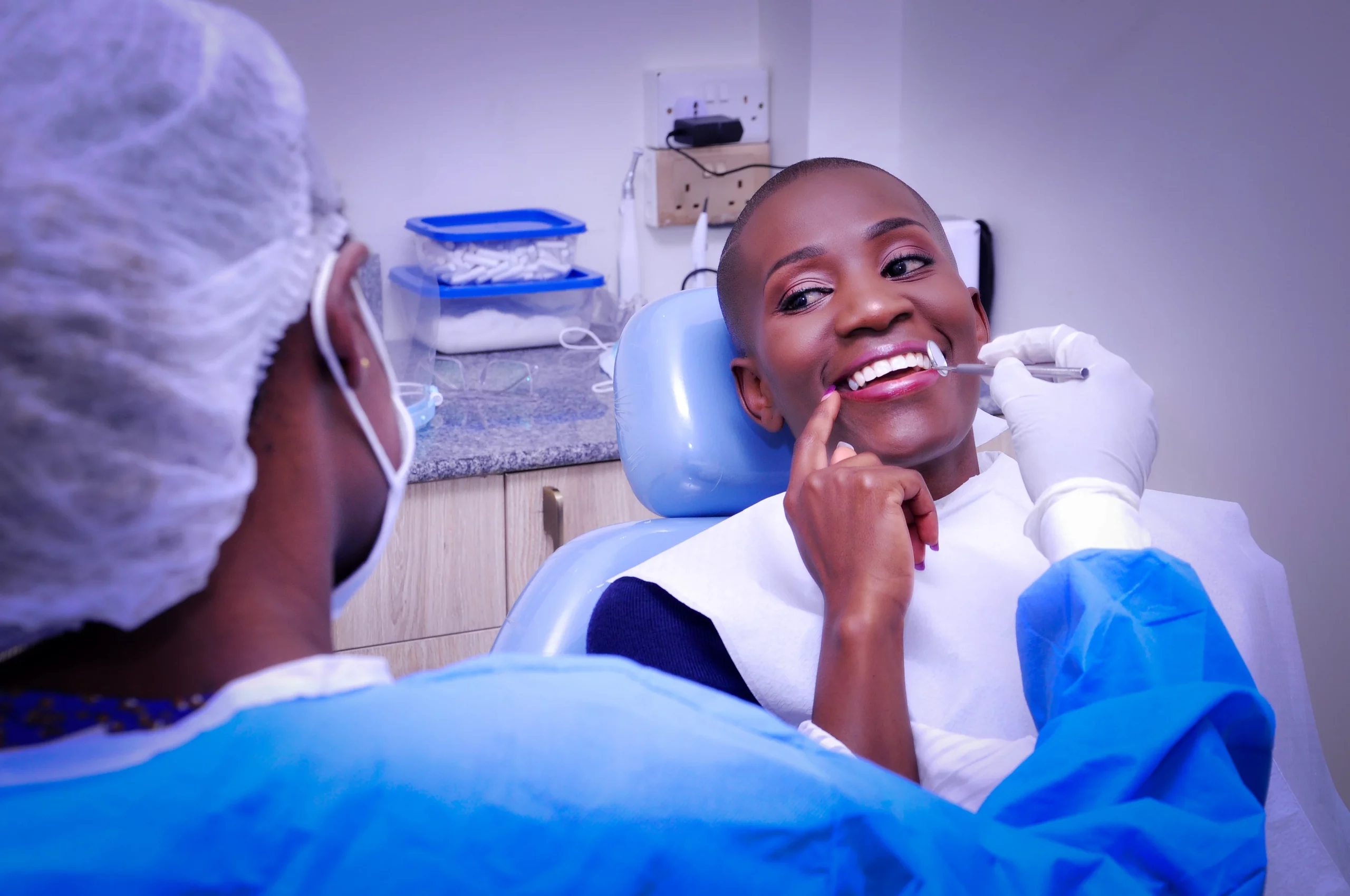
If you have been putting off a dental cleaning because you are not sure what it involves, whether it will hurt, or whether you even need one, this health guide is for you. It is one of the most common conversations we have with patients at both our Nairobi and Kisumu dental clinics.
So, we sat down and answered the questions we actually get asked.
Why does this matter for us as Kenyans?
The Kenya National Oral Health Survey found that over 98% of Kenyan adults have some form of gum disease. That is not a number meant to alarm you, but a reminder that oral health in this country is genuinely underserved, and that routine professional teeth cleaning can make a real difference.
What actually happens during a teeth cleaning?
A professional teeth cleaning, also called scaling and polishing, removes the plaque and tartar (hardened plaque) that builds up on your teeth over time, especially in the areas your toothbrush cannot quite reach.
Here is the honest version of what to expect when you come in:
- Your dentist will examine your teeth and gums first to understand what they are working with
- They will use a small ultrasonic scaler, which vibrates and sprays water, to break up the tartar. You will hear a gentle buzzing and feel some vibration, but it is not drilling
- Any remaining deposits are removed with fine hand instruments
- Your teeth are then polished with a gritty paste that leaves them feeling smooth and looking brighter
- You leave with that unmistakable clean-teeth feeling. Your tongue will notice immediately
The whole appointment typically takes between 30 and 60 minutes, depending on how much buildup there is.
Read: Understanding bad breath and overcoming this silent social barrier
Does teeth cleaning hurt?
For most patients, no. It does not hurt. You might feel some vibration and a little pressure, but pain is not the norm.
If your gums are inflamed or you have gone a long time between your dental visits, you may notice some tenderness, especially near the gumline. This is normal and settles quickly, usually within 24 to 48 hours. Any mild bleeding during the procedure is also common if the gums are inflamed, and it typically stops shortly after.
If you have a low pain threshold or significant anxiety about dental visits, just tell us before we begin. We have options to make the process more comfortable for you, including topical anaesthetic gel for sensitive spots.
Most first-time patients are surprised by how manageable it is, and many say it was far better than they expected.
Will my teeth feel sensitive afterwards?
This depends largely on how long it has been since your last cleaning.
If you come in every six months as recommended, your teeth generally do not become sensitive after cleaning. The procedure is straightforward, and your gums are used to being in good shape.
However, if it has been a while, say, a year or more, there may be significant tartar and calculus covering parts of your teeth and gumline. When that is removed, those areas are briefly exposed to temperature and sensation for the first time in a while. That is what causes sensitivity after the procedure, not the cleaning itself.
Should you worry? Not at all. This sensitivity is temporary. It usually fades within a few days. We also have desensitising treatments we can apply at the appointment if needed, so please mention it when you arrive.
How often should I get my teeth professionally cleaned?
The standard recommendation, and what both the WHO and Kenya’s National Oral Health Policy support, is every six months. Twice a year keeps plaque and tartar from building to levels that cause real damage.
That said, your needs may differ. Some patients with a history of gum disease, certain medical conditions like diabetes, or a tendency to build tartar quickly may benefit from coming in every three to four months. We will always tell you honestly what we think is right for your situation because every smile is unique.
If you ever think the six-month routine sounds excessive, consider this: gum disease is the leading cause of tooth loss in adults. A cleaning twice a year costs significantly less, financially and physically, than treating the problems that come from skipping it.
Is teeth cleaning the same as whitening?
Not exactly, though many patients notice their teeth look brighter after a cleaning, which is why the confusion is understandable.
Here is the difference:
- Scaling and polishing removes surface stains caused by tea, coffee, tobacco, and food, along with plaque and tartar. Your teeth return to their natural colour, which can appear significantly lighter if there was heavy staining
- Teeth whitening is a separate cosmetic procedure that is meant to lighten your teeth’s shade beyond what cleaning can achieve
So, if your teeth have yellow or brown stains, a cleaning alone will not change that. But it is always the right first step, because whitening works better and lasts longer on clean teeth.
Learn more: Here is the difference between teeth whitening and teeth cleaning
I brush twice a day. Do I still need professional cleaning?
Absolutely! This is probably the most important thing we can tell you.
Brushing and flossing are essential, but they only remove soft plaque. Once plaque hardens into tartar (also called calculus), it bonds to the enamel and cementum of your teeth in a way that no toothbrush or floss can shift. Only professional dental instruments can remove it.
In fact, the 2015 Kenya National Oral Health Survey found that even among adults who practise daily oral hygiene, gum disease remains remarkably prevalent. Remember, tartar tends to form in the same places most people miss when brushing, behind the lower front teeth, along the gumline at the back, and in between teeth.
Home care and professional cleaning work together. One does not replace the other.
Play the video below for quick insights with our Resident Dentist, Dr Dolphine Minai.
What should I do to keep my teeth healthy between visits?
The basics matter more than anything fancy:
- Brush twice a day after breakfast and before bed. Two minutes each time, with a soft-bristled toothbrush
- Floss at least once a day. Most people skip this, but it is where most of the damage happens
- Rinse with water after meals. Swishing helps dislodge food particles before they start feeding bacteria
- Limit sugary drinks and snacks, especially between meals. Sugar feeds the bacteria that produce acid and cause decay
- Change your toothbrush every three months, or sooner if the bristles are frayed
None of these is revolutionary. But doing them consistently, combined with a professional cleaning every six months, is what actually protects your teeth over the long term.
Does teeth cleaning affect the enamel?
No. This is a concern we hear occasionally, and it is worth addressing directly.
Professional scaling uses instruments designed specifically to remove calculus from the tooth surface without scratching the enamel. When done correctly by a trained dental professional, there is no damage to the tooth structure. The polishing paste used afterwards is also mild. It smooths the surface and removes stains, not enamel.
What does damage enamel over time is tartar left untreated, acidic drinks, and aggressive brushing with a hard-bristled toothbrush. Professional cleaning is protective, not harmful.
If you are reading this and realising it has been longer than six months since your last cleaning, that is okay. We see patients at all stages, some who come every six months like clockwork, and some who are coming in for the first time in years. We are not here to judge but to help you adequately.
Lake Dental Clinic has branches in Nairobi (The Greenhouse Mall, 3rd Floor, Ngong Road) and Kisumu (Mega Plaza, 3rd Floor Block A, Oginga Odinga Road). Both clinics are open daily from 8 am.
You can book your appointment by calling 0745 050 027 or tap the button below to submit your appointment request on your terms.
Leave a Reply