
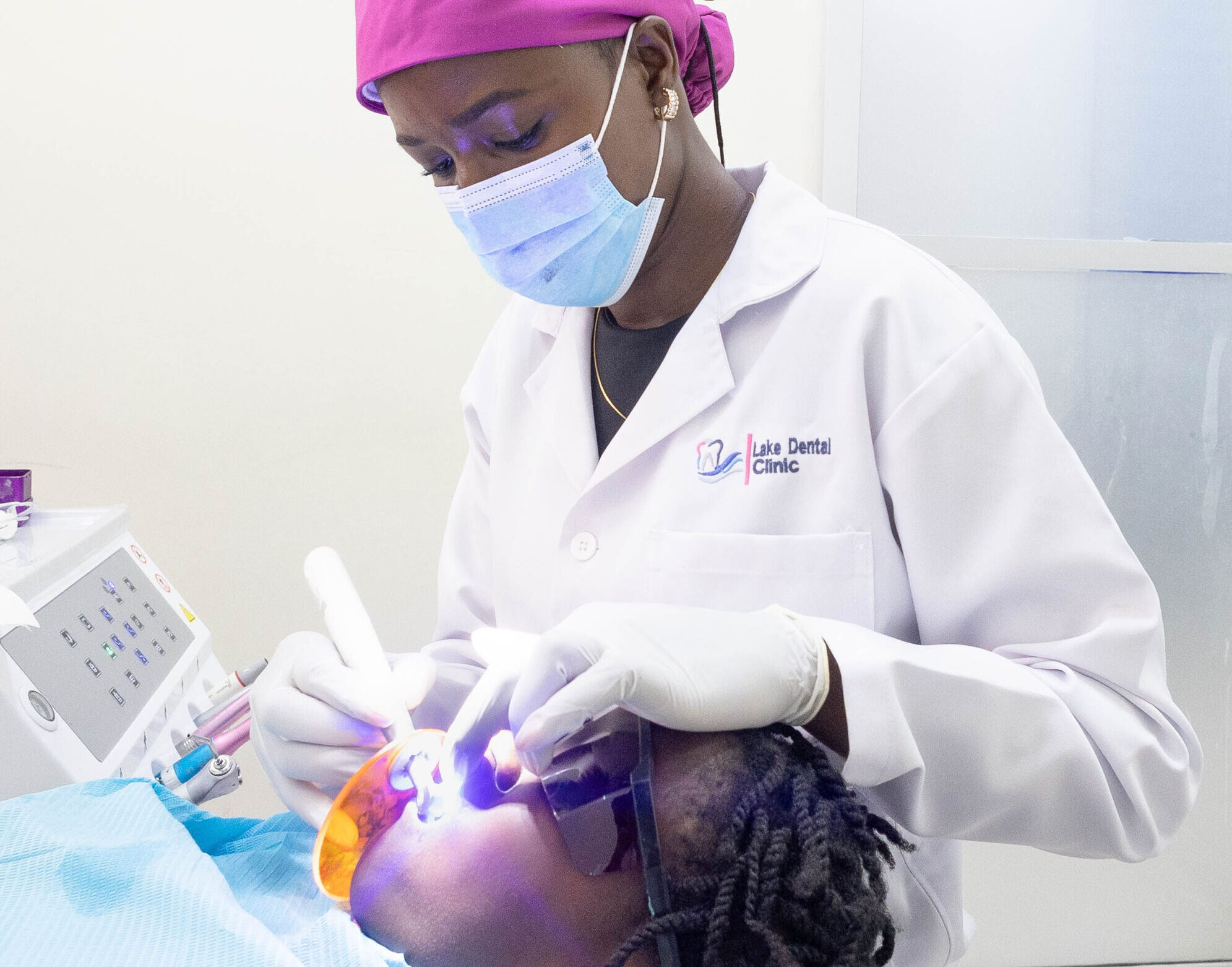
Most people don’t wake up one morning and decide they need a dental filling. It’s usually smaller than that at first. A twinge when you drink something cold, a rough patch your tongue keeps finding, or a bit of food that seems to catch in the same spot every time you eat.
Obviously, these events are easy to explain away or postpone. Yet that’s exactly how a small, simple restoration turns into a root canal treatment (therapy) months down the line.
Over the years we’ve served patients in Nairobi and Kisumu; those who come in for “just a check-up” often leave surprised that the sensitivity they’d been living with for months was actually decay, quietly progressing. Good to mention, it’s not carelessness. Early tooth decay is genuinely hard to notice on your own. That’s why we are here. The earlier we catch it, the simpler, cheaper, and less painful it is to treat.
Now, to help you make proactive, informed decisions, here are six signs worth paying attention to:
1. Sensitivity to cold or sweet
A quick zing when you sip iced water or take a bite of something sugary is one of the earliest signals of enamel breakdown. It happens because decay has started to wear through the enamel layer that normally protects the sensitive dentin underneath. If the sensitivity passes quickly, it’s easy to dismiss, but it’s rarely random.
At times, you may notice sensitivity to hot drinks or food.
When a tooth reacts specifically to heat, it’s usually a sign that the nerve inside the tooth is inflamed or infected, not just that the enamel is worn. A lingering, throbbing ache that builds after sipping something hot rather than fading right away is a common signal. Heat sensitivity in particular often points to a nerve in trouble, because an infected or dying nerve tends to react more to warmth than cold; blood flow and pressure build inside the tooth as tissue breaks down, and heat makes that worse. At that point, the nerve usually can’t recover on its own, and a root canal treatment is what removes the damaged tissue, clears the infection, and saves the tooth from extraction.
2. A visible dark spot, groove, or stain on a tooth
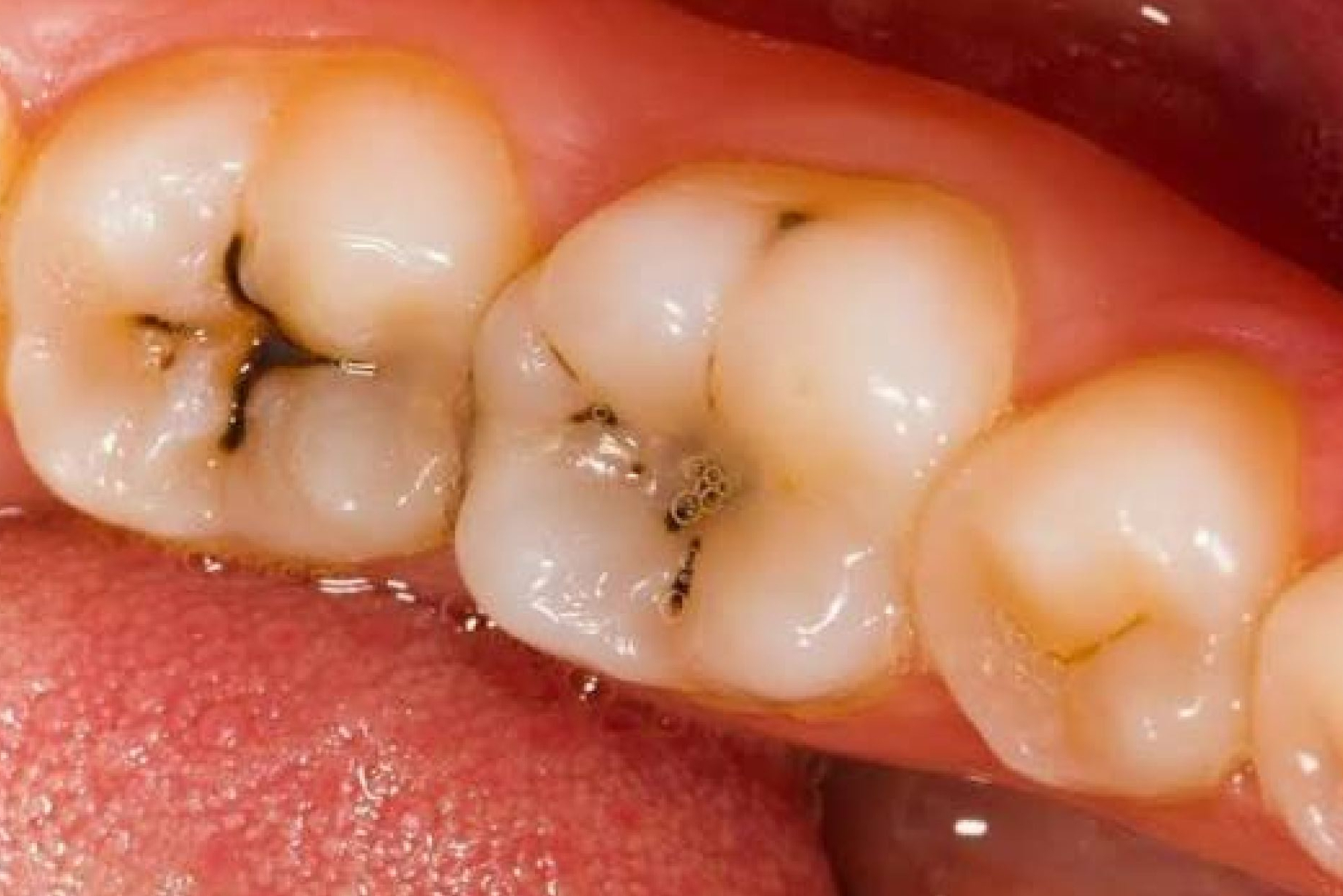
Tooth decay doesn’t always announce itself as a hole. Often it starts as a small brown, grey, or black spot, sometimes in the grooves of your back molars where a toothbrush doesn’t easily reach. If you notice a spot that wasn’t there a few months ago, it’s worth a look, not a wait-and-see.
3. Food consistently getting stuck in the same spot
If a specific tooth keeps trapping food no matter how carefully you eat, there may be a small cavity or a weakened area creating a ledge where debris collects. This is one of the most common early complaints, and one of the easiest to treat while it’s still small.
4. A dull ache that comes and goes
Unlike the sharp, unmistakable pain of a deep infection, early decay often produces a mild, intermittent ache that is noticeable after a meal, then gone by the next morning. Many patients wait for the pain to become “serious enough” to justify a visit. By then, treatment is usually more involved than a direct restoration.
5. Visible pits or small holes
By the time a cavity is visible as an actual hole, decay has usually progressed past the enamel into the dentin. It’s still very treatable with a filling at this stage, but this is close to the point where waiting longer starts to risk the nerve of the tooth.
6. Bad breath or a persistent unpleasant taste that brushing doesn’t fix
Decay creates a small pocket where bacteria thrive, and those bacteria produce odour as a by-product. If regular brushing and flossing aren’t resolving a persistent bad taste or smell, the cause may not be hygiene but a cavity your toothbrush can’t help.
Tooth decay is far more common locally than most people assume.
Kenya’s national oral health survey, conducted in 2015, found dental caries in 40% of children examined, alongside gum disease in over 90% of the population and dental fluorosis in about 41% of children, a picture significant enough that helped shape the Kenya National Oral Health Policy 2022–2030. Among adults, caries prevalence has been recorded at similarly high levels in different regions of the country, with one Bungoma County study putting it at 34%, and earlier research in rural arid areas recording rates as high as 43%.
Two things stand out in that data. First, this isn’t a rare problem. So, if you’re noticing one of the signs above, you’re far from alone. Second, most of that decay is preventable and highly treatable in its early stages, which is exactly why routine dental check-ups matter as much as reacting to pain.
Why get a dental filling now rather than later?
A filling is one of the simplest procedures in dentistry. It’s typically completed in a single visit, done under local anaesthesia, with the tooth structure restored the same day. Left untreated, that same cavity can progress to needing a root canal, a crown, or in advanced cases, extraction. Beyond cost and time, there’s the discomfort of living with a problem you could have solved months earlier.
This is where we are convinced the real value of a dental visit lies; not just in fixing a tooth, but in listening closely enough to catch the small things before they become big ones. That’s the balance we try to bring to every patient at Lake Dental Clinic. That is, the expertise to know exactly what we’re looking at, and the empathy to understand what it’s like to have been ignoring it.
Having read this dental health topic, if any of the signs above sound familiar, mildly, or even if you’ve talked yourself out of it before, it’s worth having it looked at. A simple restoration today is almost always simpler than whatever it becomes in like six months from now.



My appointment went well
Would mostly recommend the place,





Only consider revising your charges that are slightly above the market prices


. .let's talk of dentist, she is excellent . She took the time to explain every procedure she was doing. For example, when my mom's teeth removal and replacement, . The Dr .was very supportive, and thorough when explaining the process. (Am happy my mom can smile again)She is a professional and has a naturally lovely personality. I would recommend Lake dental clinic to everyone. They have the best dentist !





1- Reception good
2- Doctor who attended to me was friendly and better still prepares you psychologically for every step he's going to undertake. Thumbs up.
3- Facility is superb




Much appreciation to Dr. Owino for the service. God bless you so much.
I am looking forward for more services from your facility.
Leave a Reply